How Much Does It Cost to Run a

Raffle Fundraiser?

One of the first questions nonprofit teams ask is simple: how much does a raffle cost? The good news is that raffles are usually one of the most cost-efficient fundraisers you can run. The real key is understanding which costs matter, which costs can be reduced, and which pricing decisions quietly affect how much money you actually raise.


Low upfront cost potential


Donated prizes can change the math


Transparent checkout reduces friction


Built for real nonprofit raffles

Typical raffle costs usually fall into four categories.

1

The raffle prize

2

Payment processing fees

3

Fundraising platform costs

4

Promotion and marketing

Many organizations cut costs dramatically through donated prizes, sponsor support, volunteer promotion, and a checkout experience that keeps supporters focused on buying instead of second-guessing fees.

The real cost picture is usually simpler than teams expect.
This page is designed to answer the budget question clearly, without overcomplicating it. Most nonprofit raffles do not fail because the costs are too high. They struggle because teams underestimate the planning details, ignore checkout friction, or assume “free” always means better fundraising.
01

The raffle prize

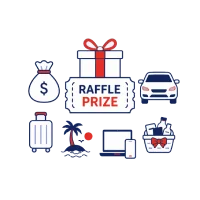
The prize is usually the biggest expense. Many organizations reduce or eliminate this cost through donated prizes, sponsors, or partner businesses.

  • → Cash prizes
  • → Vehicles
  • → Vacation packages
  • → Electronics
  • → Gift baskets
  • → Sponsor-donated items
02

Payment processing fees

Any online payment requires payment processing. These fees are standard across most online transactions and usually include a percentage plus a small per-transaction amount.

  • → Credit card processing
  • → Per-transaction fees
  • → Applies to nearly all online payments
03

Fundraising platform costs

Raffle platforms charge in different ways. The structure matters because pricing model affects checkout psychology and total fundraising results.

  • → Organization-paid fees
  • → Supporter service fees
  • → Tip-based pricing models
04

Promotion and marketing

Promotion is often overlooked. Some teams spend on ads, email tools, signage, or print materials. Others rely mostly on community sharing and sponsor promotion.

  • → Email marketing
  • → Social promotion
  • → Printed flyers
  • → Event signage

Bundle pricing changes how many supporters you need.

A lot of teams focus on total goal and forget to think about average order size. That is a mistake. If your average purchase goes up, the number of supporters you need goes down fast. That can be the difference between a stressful raffle and a very manageable one.
Example Fundraising Goal
$50,000 Fundraiser
Typical Ticket Bundle Options
1 Ticket
$10
$10 per ticket
3 Tickets
$25
$8.33 per ticket
If average purchase is
$50 avg (10-ticket bundle)
Fundraising goal $50,000
Average purchase $50
1,000 purchases needed
If average purchase is
$25 avg (3-ticket bundle)
Fundraising goal $50,000
Average purchase $25
2,000 purchases needed
The takeaway: Increasing the average purchase size from $25 to $50 cuts the number of supporters you need in half — from 2,000 down to 1,000. Bundle pricing is one of the highest-leverage decisions in raffle planning.

Full Raffle Ticket Pricing Guide →

Pricing models affect results because checkout design affects behavior.

Based on normalized analysis from tens of thousands of raffle transactions, the visible fee is not the whole story. The bigger issue is whether the checkout experience feels simple and expected, or whether it introduces hesitation right before the supporter is about to buy.
Checkout Friction Snapshot
Pricing Model How It Works Incremental Checkout Abandonment
Organization-paid pricing No added fees at checkout or added fees of under 10% 0%
Supporter service fee (~12%) Transparent fee shown at checkout ~1%
Service charge 11–14% Fee added at final step 1–2%
Tip prompt ~15% Optional tip requested at checkout ~25%
Tip prompts 17–30% Higher tip suggestions shown 30–40%
Organization-paid pricing
How It Works No added fees at checkout
Abandonment 0%
Supporter service fee (~12%)
How It Works Transparent fee shown at checkout
Abandonment ~1%
Service charge 11–14%
How It Works Fee added at final step
Abandonment 1–2%
Tip prompt ~15%
How It Works Optional tip requested at checkout
Abandonment ~25%
Tip prompts 17–30%
How It Works Higher tip suggestions shown
Abandonment 30–40%
What this means: Even small amounts of friction at checkout can significantly reduce total fundraising revenue. A 25–40% abandonment rate can cost more than any platform fee you'd otherwise avoid.

The $20,000 Goal Scenario

The difference between these outcomes isn’t the platform fee you see — it’s how many supporters actually complete their purchase.
Organization-Paid Pricing
Your org pays the platform fee
$20,000
No checkout friction. Supporters see the price they expect to pay. Highest completion rate.
Supporter Service Fee Model
~12% fee shown at checkout
~$19,800
Minimal friction. Transparent fee. Abandonment impact is small when framed clearly.
Tip-Prompt Platforms
Tip requests at 17–30%
~$13,000
High abandonment rates at checkout erode revenue even when the baseline platform fee appears low.

The real lesson here: The visible platform fee is only part of the picture. A platform that appears free can cost your organization thousands in lost ticket sales if it introduces checkout friction that drives supporters to abandon. The difference is how many supporters complete the purchase.

Low Overhead.
Clear Value. Easy to Promote.

Raffles combine relatively low operational costs with a simple, compelling offer: support a cause and get a chance to win. That clarity makes them easier to promote than almost any other fundraising format.

Questions We Hear Every Day

Raffle Hotline
“Do we need to spend a lot of money to run a raffle?”
In many cases, the answer is no. Some of the most successful raffles rely heavily on community support, donated prizes, and volunteer promotion. The most important planning decisions are usually not the upfront costs — but how clearly the raffle is presented and how easy it is for supporters to buy tickets.

Nearly 20 Years of Raffle Expertise

Step 1 icon

Purpose-Built Raffle Infrastructure

Designed specifically for nonprofit raffles — not repurposed ticketing or general event software.
Step 2 icon

Hybrid Online + In-Person Sales

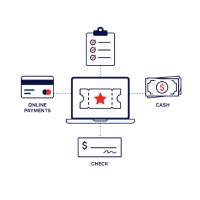
Accept online payments, cash, and check — all entries unified into a single drawing pool.
Step 3 icon

Real Human Phone Support

When your event is live, you can actually reach someone. That’s rarer than it should be.
Step 4 icon

Transparent Pricing & Reporting

No hidden fees. Clear reporting tools so your team always knows exactly where you stand.
🏆
Nearly 20 Years
Pioneering online raffle fundraising since the early days
🔢
Tens of Thousands
Raffle transactions analyzed to surface real performance data
🤝
Every Raffle Type
Queen of Hearts, 50/50, basket raffles, ball drops & more
📞
Live Phone Support
Real humans — available when your event is actually running
Made in America
Built for nonprofits by people who understand the mission

Raffle Mastery: The Complete Book to Running Profitable Nonprofit Raffles

120+ pages of real-world raffle strategy drawn from nearly 20 years of experience supporting thousands of nonprofit fundraisers. Ticket pricing psychology, bundle tactics, promotion strategies, compliance checkpoints, and the common mistakes that kill raffle revenue.
  • CheckmarkTicket pricing strategies that increase average order value
  • CheckmarkBundle psychology — why the right packages outperform discounts
  • CheckmarkHybrid event playbooks for in-person + online sales
  • CheckmarkCommon compliance mistakes and how to avoid them
Normally $19. Free when you join our occasional nonprofit raffle newsletter.

Frequently Asked Questions

K
L

What is the biggest cost in a raffle fundraiser?

Usually the prize. That said, many successful raffles dramatically reduce costs by securing donated prizes or sponsor-backed experiences.
K
L

Are raffles expensive to run?

Not usually. Raffles are often one of the most cost-efficient fundraisers because they can run with low overhead, especially when promotion and prizes are community-supported.
K
L

Do fundraising platform fees affect results?

Yes. The fee percentage is only part of the story. Checkout design affects completion rate, and extra friction can reduce how many supporters actually finish buying tickets.
K
L

Can a raffle work with a small upfront budget?

Absolutely. Many nonprofits begin with donated prizes, volunteer promotion, and low-cost software options so they can raise funds without large upfront spending.
K
L

Why do ticket bundles matter so much?

Because average order size changes the math. If the average purchase doubles, you need far fewer buyers to reach the same fundraising goal.

Talk to a Support Team Member

    Start planning your raffle fundraiser with software built for real nonprofit events.

    This page keeps the message straightforward because that is the point. Raffles can be cost-efficient, flexible, and highly effective. The best results usually come from smart pricing, strong presentation, and a checkout flow that keeps supporters moving toward the purchase instead of away from it.
    Skip to content