


Free Fundraising Platforms: What Nonprofits Should Know
Tens of thousands of raffle transactions analyzed
Real human phone support for every organization
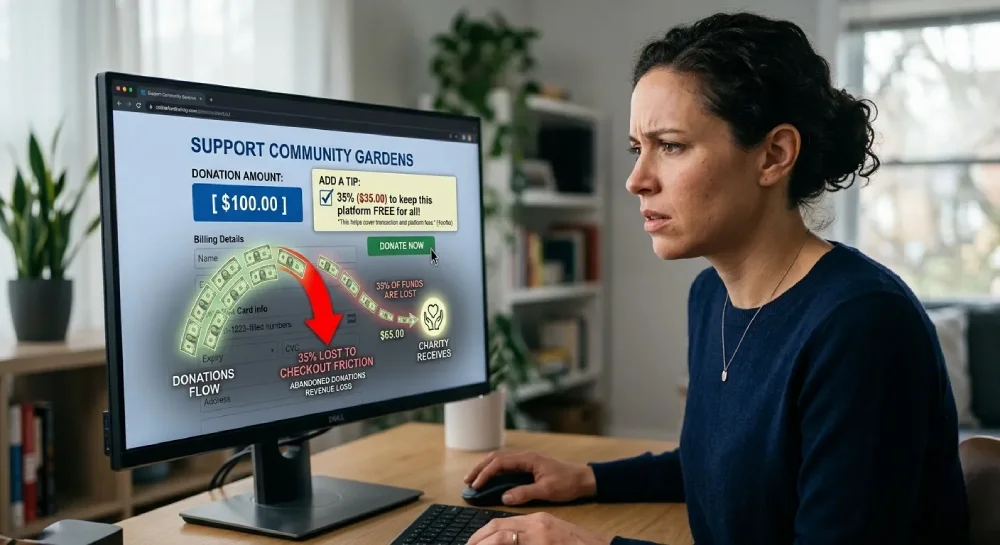
Are Free Fundraising Platforms Really Free?
Most “free” fundraising platforms still generate revenue — they’ve just moved the cost somewhere else. Understanding where is the first step toward choosing the right platform for your organization.
A fee added to the supporter’s total at checkout — not charged to your organization, but visible to the buyer.
An optional — but prominently displayed — tip suggested at checkout to “support the platform.”
Standard card processing costs, sometimes bundled with additional platform markups.
The real question isn’t which platform is cheapest to your organization. It’s which checkout experience leads to the most supporters actually completing their purchase.
The Two Most Common Models
Free fundraising software generally follows one of two approaches. Each one handles cost differently — and each produces a different experience for your supporters.
Supporter Service Fees
Your organization keeps the full ticket price. Supporters pay a small, clearly disclosed service fee during checkout. For many nonprofits, this is the simplest way to run a fundraiser without paying platform costs directly.
$50.00
+$6.00
$56.00
$50.00 ✓
Tip-Based Platforms
15%
20%
25%+
Yes — but…
Checkout Friction Has a Measurable Impact
The biggest difference between fundraising platforms is often not the visible fee — it’s how many supporters make it all the way through checkout.
| Pricing model | Incremental checkout abandonment | Typical fundraising impact |
|---|---|---|
| Organization-paid pricing | 0% | Normal purchase behavior. |
| Supporter service fee (~12%) | ~1% | Minimal measurable impact. |
| Service charge (11–14%) | 1–2% | Slight friction. |
| Tip prompt around 15% | ~25% | Major hesitation during checkout. |
| Tip prompts (17–30%) | 30–40% | Severe abandonment and lost revenue. |
Same Raffle. Very Different Results.
Both platforms below are “free” to the organization. But the checkout experience changes everything.
- Scenario: $20,000 Raffle Fundraiser Goal — identical ticket prices, same number of interested buyers
Clear, transparent checkout experience
~$19,800
Minimal abandonment. Supporters see a straightforward, expected fee and proceed with confidence.
~1% incremental abandonment on a transparent service fee
Unexpected prompt disrupts checkout flow
~$13,000
Large tip prompts cause significant drop-off. Many supporters decide not to complete the purchase.
~30–40% incremental abandonment from tip friction
“We didn’t realize how the checkout would look to supporters.”
A common post-launch comment from nonprofit organizers
The reality behind that sentence
Organizations often focus on avoiding platform fees. That is understandable. But the supporter checkout experience is what ultimately determines how many tickets get sold. When the fee explanation is confusing, or the last step feels awkward, completed purchases drop.
This is one of those issues that looks small in a platform demo and suddenly becomes very large when a live fundraiser depends on it.
The Right Tool for the Right Situation
Free platforms aren’t the wrong answer for every nonprofit — but they work best in specific situations. Here’s where they tend to be a good fit.
Smaller Fundraising Events (Under $1000)
Lower total revenue means the checkout abandonment impact is less significant — and cost savings matter more at small scale.
Short-term campaigns (Less than 1 week)
A one-time push with a narrow audience can work well on a free platform, especially when supporters already know and trust your organization.
First-Time Online Fundraising
Organizations experimenting with online fundraising for the first time can use a free platform to test before committing to a dedicated solution.
However: larger fundraising events — especially raffle fundraisers — often benefit significantly from a simpler, more predictable checkout experience designed specifically for ticket-style purchases. The revenue difference can be substantial.
Transparent pricing instead of checkout guesswork
Experience matters when the fundraiser is real
The Chance2Win team helped pioneer online raffle fundraising nearly 20 years ago. Over the past decade the platform has evolved to support thousands of nonprofit fundraising campaigns of every type and size.

Keep the pricing conversation moving
Questions nonprofits actually ask
Are free fundraising platforms really free?
What is the biggest difference between free fundraising platforms?
Why do tip prompts matter so much for raffle fundraisers?
When is a free fundraising platform a reasonable option?
What does Chance2Win do differently?
Talk to a Support Team Member

Raffle Mastery: The Complete Book to Running Profitable Nonprofit Raffles
 Ticket pricing strategies that increase average order value
- Bundle psychology — why the right packages outperform discounts
- Hybrid event playbooks for in-person + online sales
- Common compliance mistakes and how to avoid them
 Ticket pricing strategies that increase average order value